We've stopped accepting new applications.
Preparing a claim properly takes time — a CPA has to pull your IRS transcripts, verify every penalty line by line, and prepare the filing. With the submission deadline this close, there isn't enough time left to responsibly complete that work for new clients. Rather than take a payment for work we can't stand behind, we've closed new applications.
Already submitted? You're covered. Every application we've accepted is being processed through completion — nothing changes for existing clients.
Still need a CPA — or want to talk it through?
Leave your details and we'll reach out — or call us directly at 844-599-3355 or email connect@kgob.com.
We only use this to contact you about your tax situation — no marketing lists, no sharing.
IRS Penalty & Interest Refund Deadline: July 10, 2026.
Some taxpayers who paid IRS penalties or interest during the COVID-era tax years may need to file a protective refund claim to preserve potential refund or abatement rights.
KGOB's CPA-prepared Eligibility Review analyzes your IRS account transcript to identify whether you have potentially affected penalties or interest for 2019–2022. Refunds are not guaranteed, and the legal issue remains unsettled — but waiting too long may cause taxpayers to lose the ability to preserve potential rights.
Illustrative figures · your review shows your actual account
Prefer to talk through your situation first? Speak with a KGOB CPA at 844-599-3355 or email connect@kgob.com.
You may have a claim if any one of these happened to you.
You don't need to remember the tax law — just whether one of these sounds familiar.
If any of these sound familiar, a CPA review can tell you exactly what you're owed.
A real ruling, a real window — and the honest catch most ads leave out.
Deadlines were extended
During COVID (January 2020–July 2023), federal filing and payment deadlines were automatically extended. Many late penalties and interest charged in that window may have been improper.
The penalties you paid
Failure-to-file, failure-to-pay, and estimated-tax penalties — plus the interest on them — for tax years roughly 2019 through 2022. The exact amount is whatever you actually paid.
Two simple stages. You only continue if it's worth it.
The Review
A CPA examines your IRS account for 2019–2022 and shows you, line by line, the penalties and interest charged during the COVID window and what's potentially recoverable. You keep the report either way.
The Claims — only if worth it
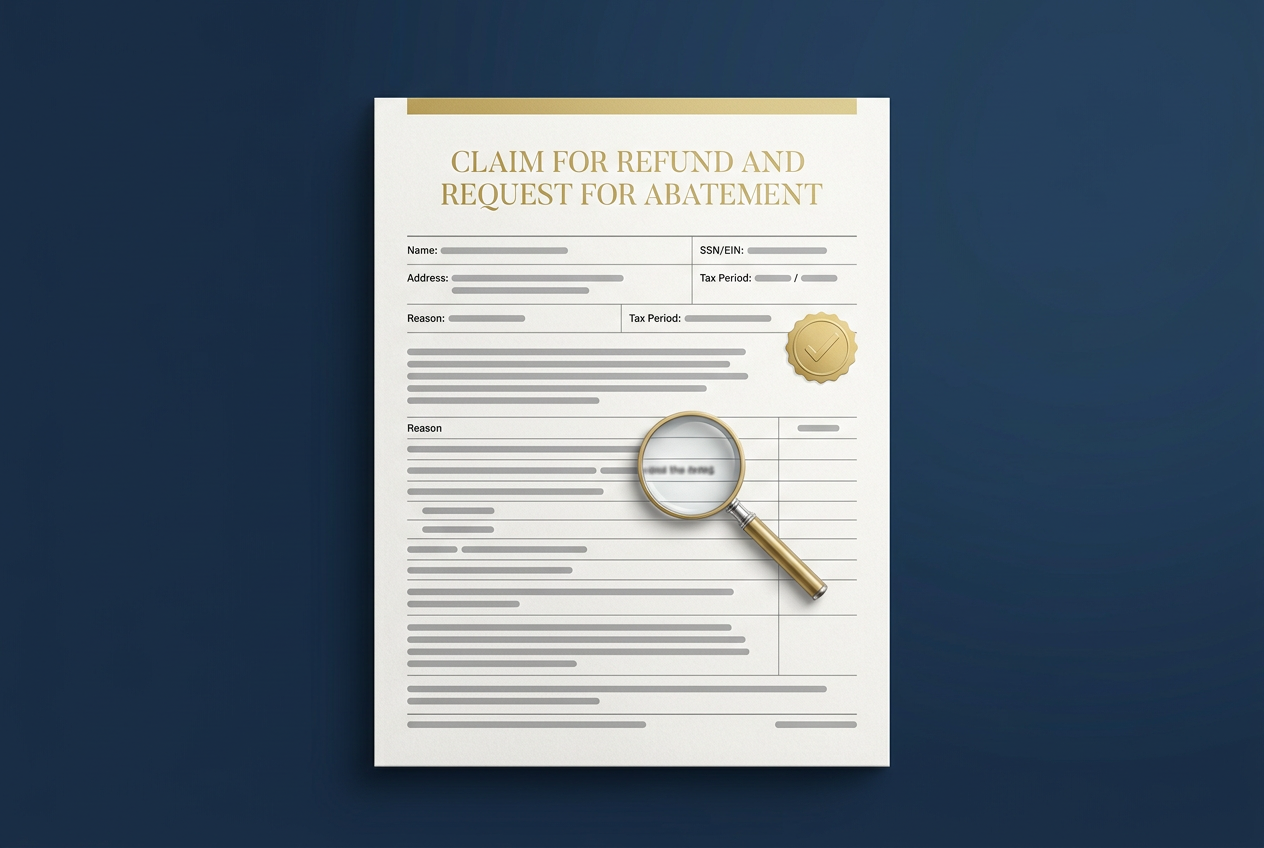
For any year worth pursuing, we prepare a protective claim (IRS Form 843) ready to file. You choose which years — there's no obligation to pursue any.
If your review shows nothing recoverable, there's nothing more to pay.
Both prices, in the open. No hidden second step.
You always see the full picture before you commit to anything.
In this category, what we won't claim matters most.
"The IRS owes you money" pattern-matches to scams. So here is exactly what this is — and isn't.
Real ruling
Based on a 2025 federal court decision, Kwong v. United States (U.S. Court of Federal Claims).
Government-flagged
The issue was raised publicly by the IRS's own National Taxpayer Advocate.
Licensed firm
KGOB is a licensed CPA firm; every claim is CPA-prepared.
Honest by design
We never promise a refund — the ruling is on appeal, and no one honestly can. We file a protective claim to preserve your right while it's decided.
Not ready to start? Check in three questions.
No account, no IRS contact — just an honest read on whether it's worth your time.
Q1Between 2020 and 2023, did you file or pay any federal tax return late?
Q2Did the IRS charge you a penalty or interest during that time?
Q3Have those penalties already been refunded or removed?
Frequently asked questions
Is this real, or one of those tax-relief scams?
It's based on a real 2025 federal court decision and was flagged by the IRS's own National Taxpayer Advocate. No one can promise a refund — the ruling is on appeal — which is why we file a protective claim to preserve your right. We charge for a CPA review and only prepare claims you choose.
How much could I get back?
It depends entirely on what penalties and interest you actually paid in 2020–2023. The review shows the exact figures from your IRS account — not an estimate.
What's the deadline?
For most people, July 10, 2026. If you paid penalties more recently, a two-year rule may extend your deadline into 2027.
Do I have to deal with the IRS myself?
No. We review your account and prepare the claim using IRS Form 843; you simply sign and file — or we can file for you.
What if there's nothing to recover?
Then there's nothing more to pay. You keep your review as a CPA-prepared summary of your IRS account.
Who qualifies?
Individuals, the self-employed, business owners, expats, estates and trusts — anyone who paid federal penalties or interest on a return due during the COVID window.
Find out what the IRS may owe you.
The review takes the guesswork out. The deadline doesn't move — but your right to claim can be preserved if you act in time.